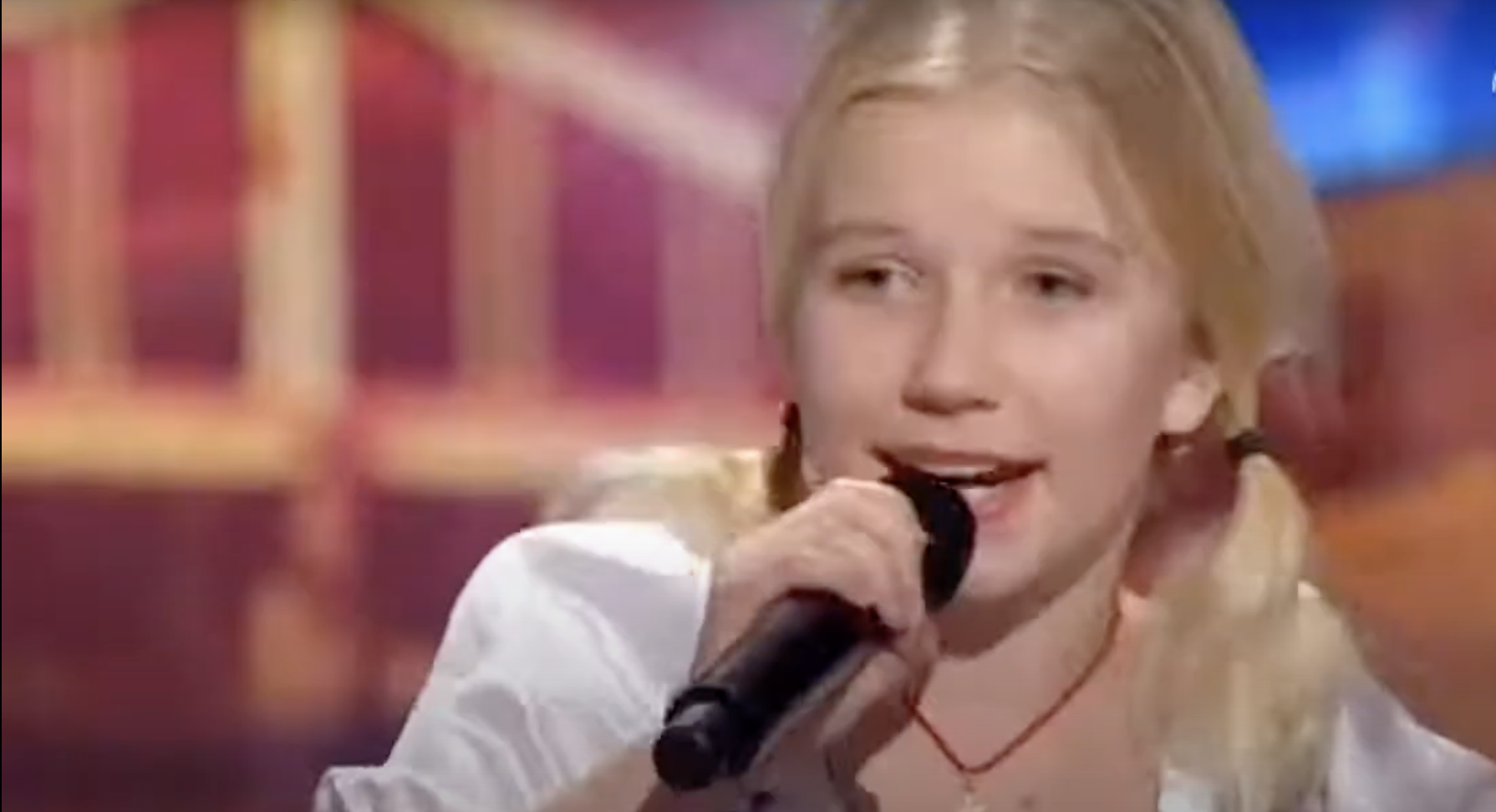
11-year-old blonde girl yodeling at TV competition

Yodeling Day?

I’ll bet you’ve never heard of Yodeling Day. You’re welcome. This January 30th, you can join voices around the world that celebrate with contests or in community practice. And before you dismiss yodeling, like I did, as belonging to Alpine mountaineers and sheepherders, you need to meet a well-known Ukrainian.

She’s not an old man in lederhosen, though this young yodeler might make you reconsider reincarnation. Check out Sofia Shkidchenko wowing the judges in talent competition as an eleven-year-old (2 min):

As if that isn’t impressive enough, eighteen-year-old Sofia yodels Mozart [say what?] at the 2024 Winner’s Concert of the Boston International Music competition (3 min): 

Clearly, yodeling isn’t just some quirky, folksy vocal technique of fast flipping from chest to head voice. It’s an art form of recognizable value. Check out these facts:

  • In 2025, Switzerland’s yodeling was recognized by UNESCO as an intangible cultural heritage—which includes oral traditions, performing arts, festive events, and traditional craftsmanship.
  • Physical benefits of yodeling include strengthening vocal cord muscle fibers and increasing lung capacity for cardiovascular health.
  • Yodeling even releases endorphins. 

What’s not to love? 

I’m game for playing with a yodel for vocal agility and performance confidence [go big or go home]. What new vibration could launch the new year for you? A whistle, a mouth sound effect, or just louder laughter?

New sounds bring fresh energy!

That is living as music. 

Subscribe here for Living As Music

Three teen siblings singing in harmony

Unexpected Harmony

Last winter, my husband and I got in a car accident. A young driver pulled out from a side street  to cross our lane and make a left turn. We couldn’t brake in time. We hit the driver’s side door, shattering glass and sending the alarm keening into the night. Our car was totaled. 

Aside from being shaken up and having mild whiplash, we walked away pretty much unscathed. When I woke the next morning feeling surprisingly intact, the song title, “Amazing Grace” came to me.

I’ve searched for hours for a simple, beautiful version of one of the best-loved songs ever written. No famous recordings brought chills like the unexpected acapella harmony of these teen siblings (3 min):

Isn’t that stunning? Pure and true. Watching them reminded me of the innocence of the 17-year-old who pulled out into our path. 

Oddly, I experienced that accident as more of a healing than a car crash. For some reason we were meant to participate in a young man’s life lesson. As I sat with him on the curb waiting for the police, he kept saying, My Dad is going to kill me. Then he asked quietly, Am I going to go to jail? 

Remember that teenage vulnerability? No sweetheart, I answered, you’re not going to go to jail.

The next day, my chiropractor said my spine was actually better after the accident than before. The jolt improved my alignment. Who knew that was possible? More grace. 

Sometimes the synchronicity of an experience is truly music in motion. We really never know when we walk out the door what or who we’ll meet. But if we stay open to amazing grace—an unexpected or miraculous gift—it may come. 

That is living as music. 

Subscribe here for Living As Music

Snow Raven, singer, in elaborate blue and gold costume singing at the microphone

I Am a Wind Instrument

My first lesson with a new singing teacher rocked my world. You are a wind instrument, she said, and I couldn’t imagine how I’d missed this blatant truth. Without air, we cannot make sound. We give shape and form to the wind itself.

Now, meet a remarkable woman who explores this connection in an astonishing way. Snow Raven is an indigenous singer from the Arctic Circle who learned to mimic nature sounds. Hear how she embodies the principle of being an instrument:

Snow Raven amplifies our kinship with the natural world while expanding our view of the human voice. [Her 8-minute TED Talk “How I Imitate Nature’s Voices,” includes several examples. If you’re a loon lover, just wait!]

What is it about this instrument we carry that’s so intriguing? Most of us barely recognize the gift of making sound. We’re often locked into narrow communication confines needed to navigate daily life.

Not that we all want to sound like the wind or a coqui frog. But, honestly, how much do we limit our expression? Would we like to be more vocally creative or daring? To give voice to some essential part of ourselves that wants to be shared?

Here’s an experiment. Try saying to yourself, I am a wind instrument, and see how it feels. Because as much as we can’t make sound without air, air can’t make sound without us.

Discover what your voice can do, if only in the privacy of your own car or shower stall. Risk singing out when no one’s around or speaking up when you know it’s your turn. 

Let’s play with sound—natural, tribal, truth-telling, or non-sensical—and see what we learn about ourselves, our wind instrument, and our connection to all life.

That is living as music.

Subscribe here for Living As Music

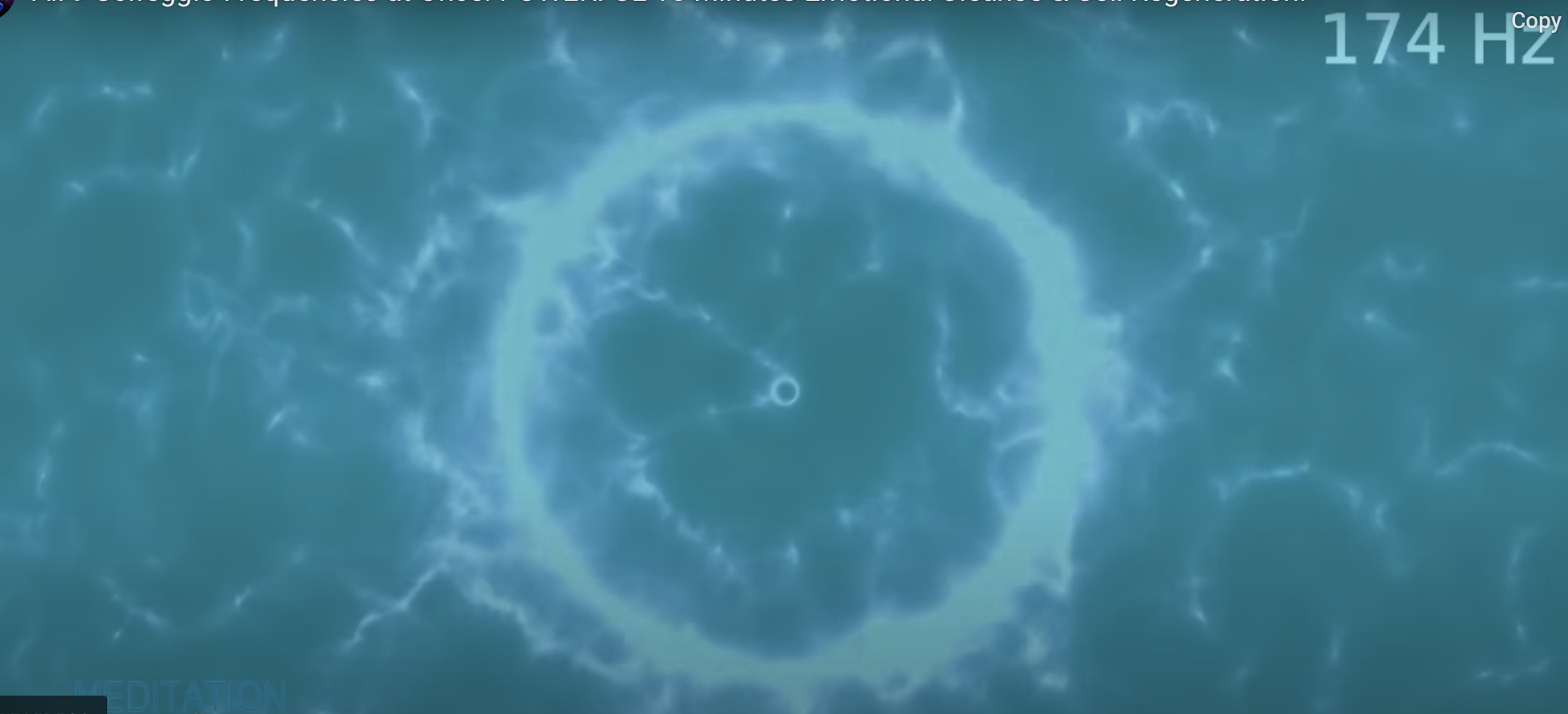
Blue background image of sound frequency in the form of a vibrating circle

Healing Sound Frequencies?

Is it possible to heal our body, feelings, or mind using sound frequencies? Sound therapists and scientists appear to be discovering the same truth. That frequencies of sound can at least invite, if not bring about, relaxation, release from anxiety, deeper sleep, and healing.

I’ve been experimenting with a low frequency sound (175 Hertz) to reduce pain. The following short sample combines 175Hz with other vibrations to encourage a theta brain wave state. Theta is the wave our brains produce when drowsy, lightly sleeping or in deep relaxation.

I aim for the most pure and refined sound in what I allow into my consciousness and what I give out through my voice. Granted that’s a tall order! But one step I can take is to test out sounds to see what beneficial impact they may have on me as an individual. 

The older I get, the more careful I am at taking anything from an outside source at face value. For example, the advent of AI has required even more alertness and attunement to my inner guidance. 

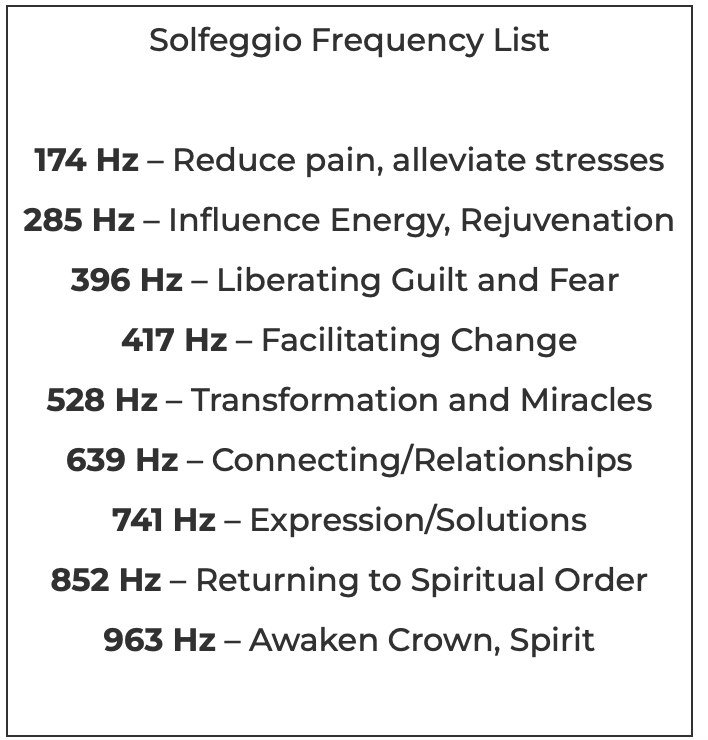
With that bit of a disclaimer, if you’d like to test out particular sound frequencies, the following is the best video I can find to sample nine currently recognized beneficial tones. (10 min). 

What impact do these sounds have as you listen? 
Which sounds are you drawn to for peace, balance or healing?

If it’s helpful, this guide below lists possible benefits from listening to the nine frequency vibrations. Perhaps your experience matches, or maybe you feel something different.

In chaotic times, every tool we can find to strengthen the integrity of our bodies, minds, and emotions is welcomed. We want to be strong, secure, and sound within our own being. 

Let’s listen inside ourselves first and foremost for our highest guidance and truth. With that intention, we’ll be led to the gifts of sound that uplift, purify, and heal.

That is living as music. 

******************************************
If you received this from a friend, check out other topics here, or subscribe below for monthly posts.💛

Subscribe here for Living As Music

The Bells of Notre Dame

The bells of Notre Dame do more than ring out. They are always alive, responding to life around them. “It’s a physical fact that these bells are actually vibrating all the time; it’s like a spirit that’s living inside of Notre Dame,” sound artist Bill Fontana told The Art Newspaper.

How does he know? After the 2019 fire, Fontana recorded harmonic pitches that the metal creates when not in motion. Check out this clip from his sonic installation, Silent Echoes: Notre-Dame (2 min):

Fontana recorded and mixed the “still sound” of the 10 bells and adjusted the levels to human hearing. He described the sound of the bells as acting like acoustic mirrors

“They’re reacting to life around Notre Dame. The slow and prominent hum of the massive bells rings in the foreground, and ambient sounds of the surrounding area flitter in the background — the noise of construction in the cathedral, a musician’s melody from the street below, birds singing in the bell tower.”

That’s a startling discovery. Are we also acoustic mirrors that react to ambient sounds, barely aware of the vibrational impact?  

An example. If my husband turns on the nightly news, he keeps the volume low. He’s very considerate of my sensitivity to the sound of reporters. Their cadence (let alone the content) makes my skin crawl, and I don’t want to be the effect or the reflection of that frequency.

Gratefully, we humans have more choice than bells. The words we speak and emotional tenor we carry can uplift our environment, if we’re mindful of our impact.

At the deepest level, our unique vibration identifies us. When we’re conscious of our signature sound, we’re truer to ourselves and to the sounds we express.

That is living as music.

Subscribe here for Living As Music

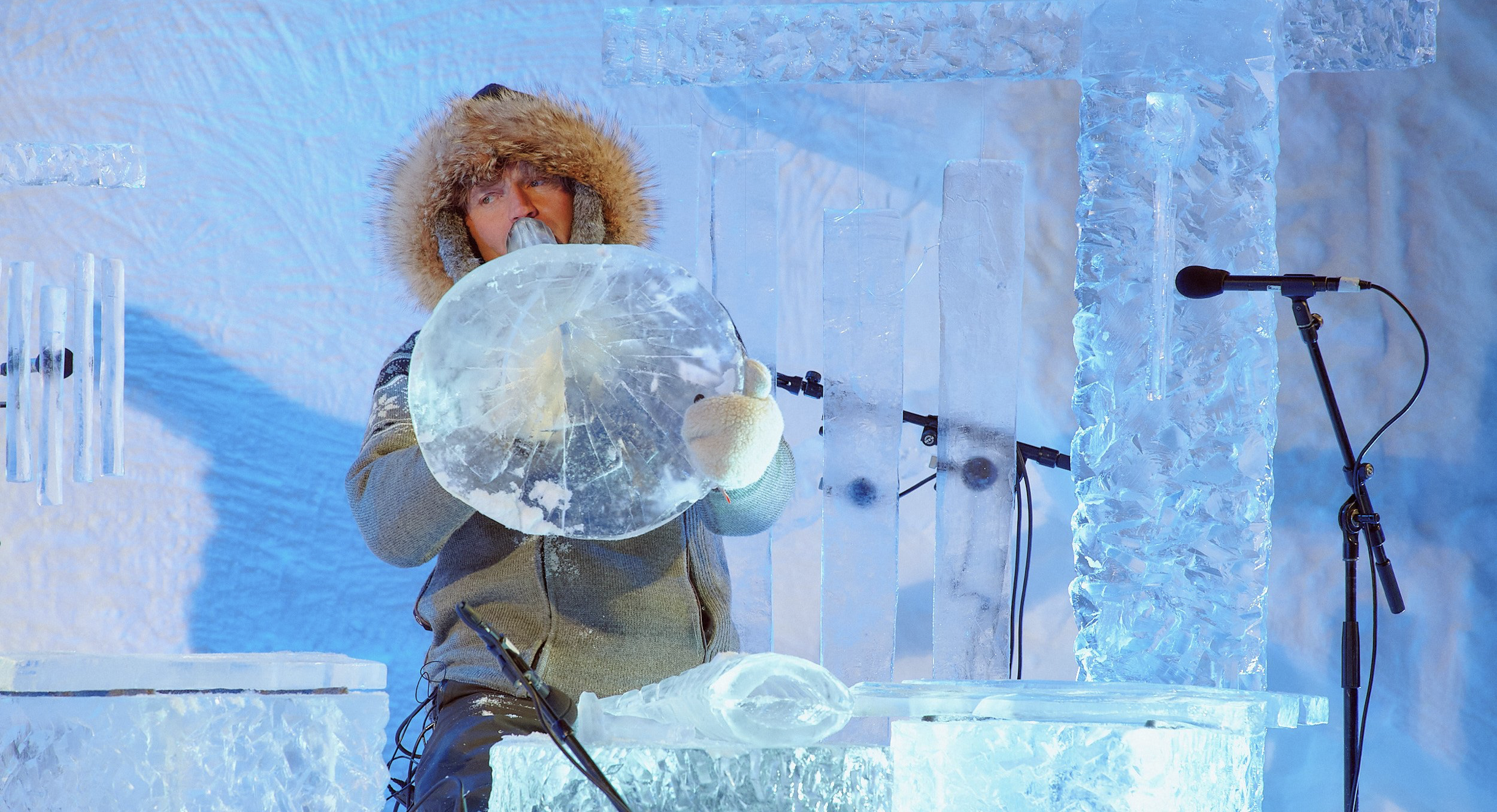
Instrument made of ice (an ice horn) being played by a musician in a parka

Ice Music

Terje Isungset is a pioneer and inventor of ice music. He creates his instruments—harps, drums, percussion, horns, and the iceophone (like a xylophone)—from blocks of harvested natural ice. He’s released 14 solo albums through his independent Norwegian record company and has toured internationally giving concerts with his Ice Quartet. Imagine being a roadie on that gig!

This ice concert, performed in the Arctic, was created in conjunction with Greenpeace to highlight the beauty of our oceans. It’s unlike anything you’ve heard: 

Instruments are crafted out of artic drift ice, sourced from and then returned to the sea. Glacial ice can be a thousand or a hundred thousand years old. Instrument-makers and musicians respect this ancient ice and that it has a sound of its own. 

American Ice sculptor Bill Covitz says ice vibrates the longest at -20 degrees, the best temperature for an ice concert. [See The Sound of Ice: Behind the Scenes Making Ocean Memorieshttps://www.youtube.com/watch?v=UEGgHf7G_-A&t=21s]

What can we learn about the collaboration of nature and human creativity from these artists?

Terje speaks of treating nature with respect and gentleness, just like the ice instruments, so it doesn’t break.

Ice cellist Ashild Brunvoll shares how nature has its own language. Ice instruments bring the sound of nature to human language, so people can understand. Nature gives us so much more than we can see.

As we enjoy a new year, some of us skiing on snow or making snow sculptures, we can pay attention to nature and connect in a deeper way. Perhaps we’ll even awaken to the music of ice.

That is living as music.

Subscribe here for Living As Music

Split screen of jazz keyboardist and jazz drummer demonstrating call and response.

Call and Response

Call and response is a form of musical dialogue where one instrument plays or sings a short phrase and another responds, creating a musical conversation. The answer may repeat or complement the call. Either way, it’s often a playful or soulful style of communication.

Check out this jazz example. Reginald Thomas (piano) and Alvin Atkinson (drums) demonstrate jazz style call and response with Duke Ellington’s “Perdido.” You won’t believe what the drummer can do!

Call and response began as a vocal technique with deep roots across cultures worldwide. Its ancient origins in building community span tribal, religious, and folk traditions. Its global breadth is stunning: West African ceremony, Native American ritual, Caribbean calypso, Cantonese opera, Celtic choral arrangements, Islamic Adhan*, and even the cultural welcoming protocol of the New Zealand Maori.

We may be most familiar with call and response in jazz, gospel, blues, or pop music. Think of B.B. King’s The Thrill is Gone when the guitar responds to his voice with a mournful melody. Or Neil Diamond’s Sweet Caroline where the audience can’t help but respond with bum, bum, bum.

Call and response is profoundly and quintessentially human. Why?

I believe we all, at some point in our lives, call out. We may call for help in a moment of deep despair, or call out from the rooftops in joyful sharing of great news. Either way, we want to be answered. It’s why crisis centers and hotlines exist, why we gather in celebration at milestone events, and why ghosting is such a devastating experience. No one wants to be ignored.

In daily life, we call out through our goals, our dreams, and our conversations with others. Answers come in the form of life experiences and personal interactions. We may not always like the responses we get. But we can be more aware of what we’re calling out for and, maybe more importantly, how we can answer the calls of others.

That is living as music.

*********************************

*Adhan is the Muslim call to prayer. Listeners mostly respond by saying the same words.

Subscribe here for Living As Music

Close up of the sun with an audio bar across showing that the sun sings, makes sound.

The Sun Sings

Are you as surprised as I am to learn that the sun “sings”? I know scientific instruments detect and monitor sounds in the universe all the time. Yet, I never thought of the sun having sound. 

Through a process called data sonification, heliophysicists use NASA satellites like audio recorders to listen to the sun’s electromagnetics. It took NASA 300 hours to make this 1-minute raw audio. Their telescope took video every 12 seconds of invisible UV light. 

Take a listen and see if you find resonance here, as the sun sings:

A simple sound can give us a way to probe inside our life-giving star and better understand its deeper layers. How cool is that?

For me, when the human world becomes too chaotic, I try to understand deeper layers, too. I work at expanding my heart, and I seek a bigger picture. I remember that the sun shines the next morning despite the human drama playing out on earth. 

And I listen for a sound to uplift me—rain on the roof, my dearest friend’s voice or my cat’s purr, a beautiful singer. Learning that the sun creates music as it shines lifts me up with light and sound. 

I also discovered recently a kind of sunrise within me each morning, too. On any given day, the quality of light inside may be diffuse or bright, depending on what I dreamt the night before, how my body feels that morning, or what emotions show up. Like internal weather.

If we greet the day by opening to that light, that sound— from an outer or inner sun— will we gain in peace and confidence? Maybe our personal world would brighten, no matter what surrounds us.

Even seeking that place is living as music.

Subscribe here for Living As Music

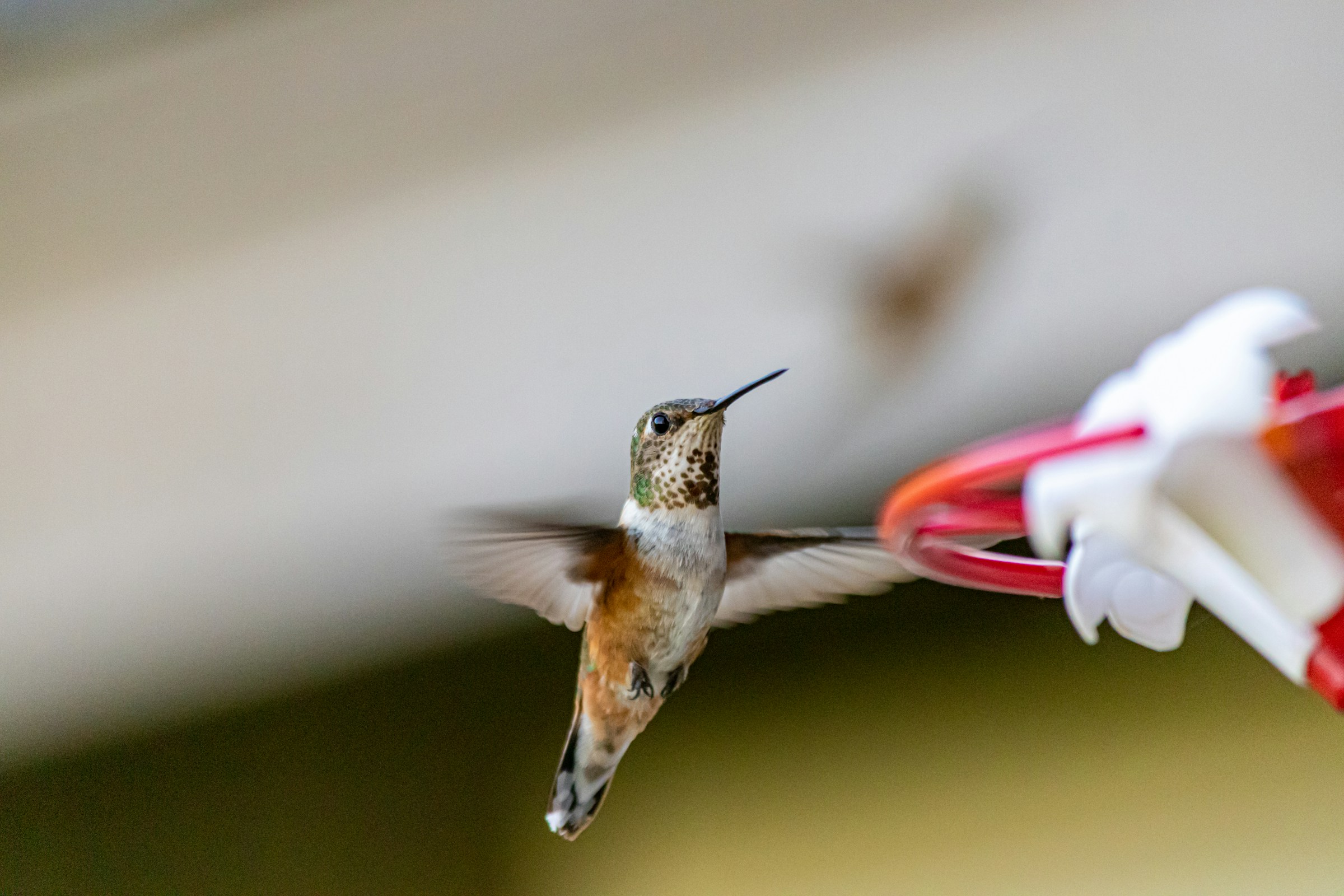
Hummingbird in flight near a feeder

Hummingbird Wings

Have you ever been close enough to hear the sound of hummingbird wings? I found it magical.

Hummingbirds hover at an average rate of 80 wingbeats per second. With strong muscles, and rotating shoulder joints, their wings flutter in a figure 8 pattern. This allows them to move forward, backward, or pivot to the side.

Take a listen to this remarkable creature in flight. You’ll hear some chirps, too!

Who isn’t delighted by catching sight of a hummingbird? In some Indigenous cultures, this little bird is the symbol of joy and healing. In others, a sign of strength, endurance, beauty and harmony.

My husband and I often share our ‘highlight of the day’ right before we go to sleep. One night, after a day of many gifts—abundant organic produce from our local farm, excitement of my upcoming book launch, strength my husband is gaining from weight lifting—how remarkable that we both named our highlight as the hummingbirds at our feeder!

It’s good to celebrate life’s big events. And, on any given day, our peak experience might still be as tiny and miraculous as the sound of a hummingbird’s wings.

All we need to do is stay alert for the small joy that darts into our lives.

That is living as music.

Photo by Eric Brehm on Unsplash

Subscribe here for Living As Music

Giraffe in motion in the wild

Giraffes Hum!

I first learned that giraffes hum to one another from reading the historical novel West with Giraffes by Lynda Rutledge. The novel fictionalizes a 1937 trek across the U.S.A., when two young giraffes arrived in New York harbor during a hurricane, barely alive, and were transported by make-shift rig to the San Diego Zoo. [A great adventure tale, highly recommended.]

Who knew that giraffes hum?
Click below to listen to this extraordinary nocturnal sound:

Giraffe in motion in the wild

In the novel, the young giraffes hum to comfort one another, to create safety, and to express a sense of contentment. The human characters are awe-struck when they experience this vibration firsthand.

I got to wondering if people who experience insomnia might benefit from learning the giraffes’ secret to comfort and peace. Many of us may listen to ocean waves or soft music as a way to relax into sleep. But what about making our own sound?

It turns out that humming isn’t just soothing. It stimulates the vagus nerve and signals the brain to calm down. It lowers our heart rate and blood pressure. Humming produces oxytocin, can release melatonin, and induces parasympathetic dominance.

Several research studies have been done on humming’s healing impact. In fact, a book called The Humming Effect dives deeply into the topic.

As we look for ways to calm our nervous system, quiet our minds, and balance our emotions, isn’t it heartening to know that we carry with us this simple sound technique? I’m trying it out.

Thank you, giraffes!
That is living as music.

*********************************
If you know someone who could benefit by reading this blog, please pass it along and make their day. 😃

Subscribe here for Living As Music